


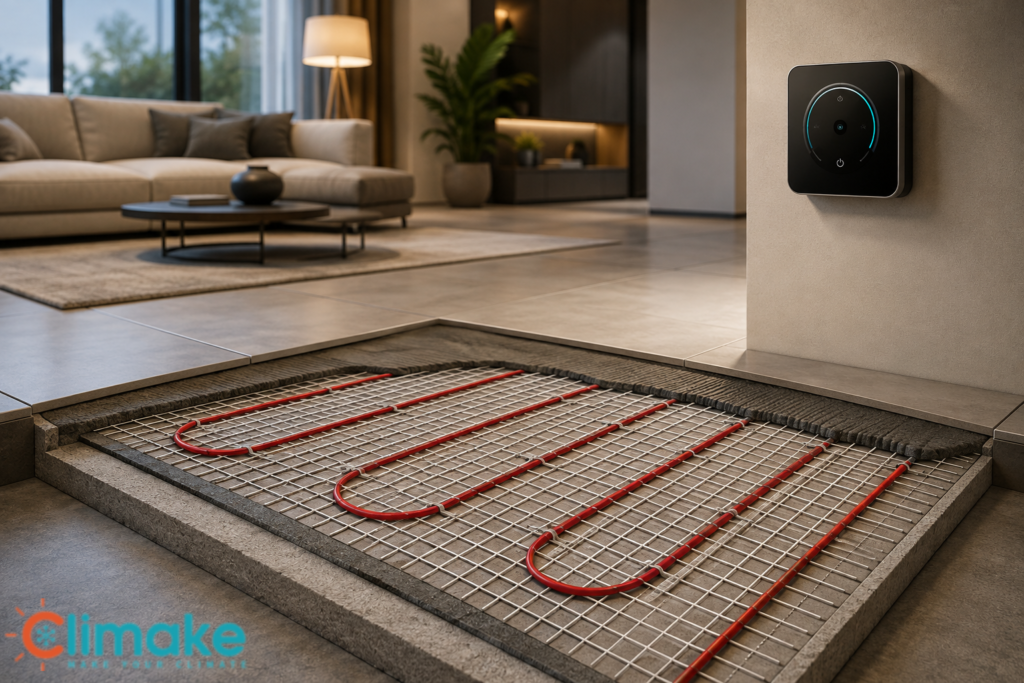
Choosing the right flooring is just as important as choosing the right underfloor heating system. The floor covering sits directly above the heating elements, so its material, thickness, thermal resistance, and installation method can affect how efficiently heat reaches the room. For homeowners in Saudi Arabia planning a new villa, apartment renovation, or luxury residential project, understanding the relationship between flooring and underfloor heating can prevent costly mistakes later. In this guide, we explain the best flooring for underfloor heating, compare tiles, marble, wood, laminate, and vinyl, and show you how to choose a flooring compatible with underfloor heating without compromising comfort, appearance, or system performance.
What Is the Best Flooring for Underfloor Heating?
The best flooring for underfloor heating is generally ceramic or porcelain tile, followed by natural stone such as marble, because these materials transfer heat efficiently from the heating system to the room. Their thermal properties allow the floor to warm effectively while retaining heat for longer periods. However, tiles and stone are not the only suitable options. Engineered wood, laminate, and certain vinyl products can also work well when they are specifically approved for underfloor heating. The key is not simply choosing a material that looks attractive, but selecting a product with suitable thermal resistance and temperature specifications for the heating system installed underneath.
Why Does Flooring Matter With Underfloor Heating?
Underfloor heating works by transferring heat from electrical cables or heating elements beneath the floor toward the room above. The flooring therefore becomes an important part of the heating pathway. A material that transfers heat efficiently can help the system respond effectively, while a thick or highly insulating floor covering can slow heat transfer and reduce the available heat output. Thermal resistance is particularly important because every additional insulating layer between the heating system and the room affects performance. Professional flooring and heating manufacturers therefore recommend checking the flooring specification before installation rather than assuming that every product within a particular flooring category will perform in the same way.
Best Flooring Options for Underfloor Heating
When choosing underfloor heating flooring, homeowners usually consider ceramic and porcelain tiles, natural stone, engineered wood, laminate, vinyl, and occasionally carpet. These materials do not perform identically because their thermal conductivity, thickness, construction, and installation method differ. Hard flooring materials such as tile and stone are generally considered the strongest choices for heat transfer. Engineered wood and suitable laminate or vinyl can provide more design flexibility while still working effectively with a properly designed system. The final decision should consider the room, expected usage, floor construction, manufacturer requirements, and the specific underfloor heating technology rather than relying only on the flooring material name.
Ceramic and Porcelain Tiles
Ceramic and porcelain tiles are among the best tiles for underfloor heating because they combine excellent heat transfer with durability and easy maintenance. They are particularly practical for bathrooms, kitchens, entrances, and living areas where homeowners want a hard-wearing surface that can distribute warmth effectively. Porcelain can also provide a wide range of colors, textures, and stone-look finishes, making it suitable for modern Saudi interiors and luxury villas. Because tile and stone are highly conductive, they can help the heating system transfer warmth efficiently to the room. During installation, however, the adhesive, substrate, joints, and overall floor construction should be suitable for the selected heating system.
Marble Flooring With Underfloor Heating
Marble flooring can be an excellent choice for underfloor heating, particularly in villas and high-end residential interiors where natural stone is part of the design. Marble has good thermal conductivity and can transfer heat from the system beneath the floor while also retaining warmth after the system cycles. However, marble thickness and the complete floor assembly should be considered because thicker stone can affect response time. The important point is to coordinate the flooring specification with the heating design before installation begins. If marble is being selected for a new villa or renovation, the installer should confirm the heating layout, floor construction, and temperature requirements so the finished floor performs as intended.
Wood Flooring With Underfloor Heating
Wood flooring can be used with underfloor heating, but the type of wood matters. Engineered wood is generally a more suitable choice than traditional solid hardwood because its layered construction provides better dimensional stability when exposed to changes in temperature and moisture. The thickness of the boards also matters because thicker flooring can provide greater thermal resistance and slow heat transfer. Homeowners choosing wood flooring should always confirm that the exact product is approved by its manufacturer for use with underfloor heating. The installation method and underlay are also important. A low-resistance system designed for the selected wood flooring can help maintain effective heat transfer while preserving the appearance and comfort associated with natural wood.
Laminate Flooring
Laminate can be a practical flooring compatible with underfloor heating when the specific product is approved for this application. It can provide the appearance of natural wood or stone while offering a relatively durable and easy-to-maintain surface. However, not every laminate product has the same construction or thermal characteristics. Homeowners should therefore check the manufacturer’s technical documentation before installation, including the recommended surface temperature and underlay requirements. The underlay is particularly important because a thick insulating layer can reduce heat transfer. For a renovation project, it is better to select the laminate and heating system together rather than installing one first and discovering later that the two products are not compatible.
Vinyl and Luxury Vinyl Flooring
Vinyl flooring and luxury vinyl tile can also be suitable for underfloor heating when the product is specifically designed and approved for heated floors. Their relatively thin construction can allow heat to reach the surface effectively, while their wide range of designs gives homeowners alternatives to traditional tile and wood. Vinyl can also be practical in areas where easy cleaning and moisture resistance are important. However, vinyl products commonly have maximum surface-temperature limits, often around 27°C depending on the manufacturer and product. Therefore, the exact technical specification should always be checked before installation. The heating system must then be configured to operate within the flooring manufacturer’s approved temperature range.
Best Flooring for Underfloor Heating in Saudi Homes
For Saudi homes, the best flooring choice depends on the room, interior design, and heating requirements. Ceramic and porcelain are particularly practical for bathrooms, kitchens, corridors, and many living spaces because they combine durability with efficient heat transfer. Marble can be attractive in luxury villas where natural stone is already part of the architectural design. Engineered wood can be considered for bedrooms and living areas when homeowners want a warmer visual appearance and the selected product is certified for underfloor heating. Vinyl and laminate can provide additional design flexibility. Rather than choosing flooring separately, homeowners should coordinate the flooring, heating system, insulation, and thermostat during the finishing stage for better overall results.
Underfloor Heating Flooring Comparison
| Flooring Type | Heat Transfer | Compatibility | Main Advantage | Important Consideration |
|---|---|---|---|---|
| Ceramic Tile | Excellent | Very High | Fast heat transfer | Correct installation required |
| Porcelain Tile | Excellent | Very High | Durable and efficient | Consider thickness |
| Marble | Very Good | High | Luxury appearance and heat retention | Thickness affects response |
| Engineered Wood | Good | High with approved products | Natural appearance | Check manufacturer limits |
| Laminate | Moderate–Good | Product-dependent | Affordable design options | Use UFH-approved product |
| Vinyl/LVT | Good | Product-dependent | Thin and versatile | Check temperature limit |
| Thick Carpet | Low | Limited | Soft underfoot | High thermal resistance |
Tile and stone are widely recognized as highly suitable coverings because of their thermal properties, while wood, laminate, and vinyl require closer attention to product specifications and installation details.
Thermal Resistance: The Technical Factor You Should Not Ignore
One of the most important factors when choosing flooring for underfloor heating is thermal resistance. In simple terms, thermal resistance measures how much a material slows the transfer of heat from the heating system to the room. Flooring with high thermal resistance can reduce heat transfer and may require the system to work harder to achieve the desired indoor temperature. For this reason, highly conductive materials such as ceramic tiles, porcelain, and stone are generally excellent choices. Wood, laminate, vinyl, and carpet can also be used, provided their thermal resistance and the manufacturer’s compatibility recommendations are considered. The thickness of the flooring and any underlay should also be taken into account, as thicker or more insulating layers can reduce heating performance.
Choosing the right flooring is only one part of planning an underfloor heating system. If you are also comparing installation and running costs, our guide to electric underfloor heating cost explains the main factors that affect the total investment and ongoing energy consumption.
Does Floor Thickness Affect Underfloor Heating Performance?
Yes, floor thickness can affect how quickly heat reaches the surface. A thicker material generally requires more time for heat to travel from the heating element to the finished floor, although the exact impact depends on the material’s thermal properties and the complete floor construction. This does not mean that homeowners must always choose the thinnest flooring available. Instead, the floor thickness should be evaluated together with thermal resistance, heating capacity, insulation, and the manufacturer’s installation requirements. For example, natural stone may perform very well despite being thicker than some other materials because of its favorable thermal properties. Professional system design helps balance these factors before installation.
What About Carpet Over Underfloor Heating?
Carpet can sometimes be used over underfloor heating, but it is not usually the first choice when maximum heat transfer is the priority. Thick carpet and thick underlay can create additional thermal resistance and reduce the amount of heat reaching the room. If carpet is important for a bedroom or another area, the complete carpet-and-underlay combination should be checked for its thermal resistance and compatibility with the heating system. Low-pile carpet with an underlay specifically designed for underfloor heating can be more appropriate than a thick, highly insulating combination.
What Flooring Should You Avoid With Underfloor Heating?
The main issue is not that an entire flooring category is automatically unsuitable, but that some individual products can have excessive thermal resistance, temperature limitations, or poor dimensional stability. Thick carpet, heavy insulating underlays, and flooring products that the manufacturer does not approve for underfloor heating should be treated cautiously. Solid wood also requires particular attention because natural timber can respond to changes in temperature and moisture. If the selected floor is not clearly approved for heated-floor applications, it is better to choose another product or obtain confirmation from the flooring manufacturer before installation. This simple step can prevent performance problems and unnecessary replacement costs later.
How to Choose Flooring Compatible With Underfloor Heating
Before choosing your final floor finish, consider five key factors: thermal resistance, flooring thickness, maximum allowable surface temperature, installation method, and manufacturer approval. You should also consider the room’s purpose and the heating requirements calculated for that space. For example, a bathroom finished with porcelain tile may have different requirements from a bedroom using engineered wood. The heating system should be designed around the final floor assembly rather than treating the flooring as a separate decision. Climake’s electric underfloor heating system uses a thin heating cable system, with the company specifying a system thickness of approximately 3–4.5 mm and compatibility with flooring options including ceramic, wood, and tile.
New Build vs Renovation: Does Flooring Choice Change?
The best flooring decision can be easier when underfloor heating is considered before construction or renovation work begins. In a new villa, the heating layout, insulation, floor buildup, electrical requirements, flooring, and thermostat zones can all be coordinated from the beginning. During a renovation, floor height can become an important consideration because adding a heating system and new flooring can affect doors, thresholds, stairs, and transitions between rooms. Electric underfloor heating can be attractive for renovations because Climake’s system has a relatively thin profile designed to minimize the impact on finished floor height.
Electric Underfloor Heating and Different Flooring Types
Electric underfloor heating generates warmth through electrical heating cables or mats installed beneath the floor surface. The system then transfers heat through the floor finish into the room. Because the heating element is hidden beneath the finished floor, selecting a suitable covering is an important part of the overall design. Climake describes its electric underfloor heating system as suitable for ceramic, wood, and tile flooring and emphasizes its thin installation profile. The company’s GREMAKE system also features a 3.6 mm heating cable profile and smart thermostat control, allowing homeowners to manage temperature and heating schedules more precisely.
Which Flooring Is Best for Each Room?
The best floor for underfloor heating can vary depending on how the room is used. For bathrooms and kitchens, porcelain or ceramic tiles are practical choices because they are durable, easy to clean, and effective at transferring heat. For living rooms, homeowners may choose tile, marble, engineered wood, or a suitable luxury vinyl product depending on their preferred design. Bedrooms can benefit from engineered wood or suitable vinyl when a softer visual appearance is desired. In luxury Saudi villas, marble and large-format porcelain can provide an elegant finish while working effectively with underfloor heating. The final decision should always be based on the exact product specifications and heating design.
Common Mistakes When Choosing Underfloor Heating Flooring
One of the most common mistakes is selecting the flooring first and checking heating compatibility afterward. Other mistakes include choosing a thick insulating underlay, ignoring the flooring manufacturer’s maximum temperature, assuming every product within a material category is automatically compatible, and overlooking the total floor buildup. Another mistake is failing to coordinate the heating system with the final flooring thickness and installation method. These issues can reduce heating performance or create unnecessary complications during installation. The safest approach is to finalize the heating design and flooring specification together, allowing the installer and flooring supplier to confirm compatibility before materials are purchased or installed.
Is Tile Really the Best Floor for Underfloor Heating?
For homeowners who prioritize heat transfer and responsiveness, tile and stone remain among the strongest choices for underfloor heating. Ceramic and porcelain provide efficient heat transfer, durability, and a wide range of design options, while marble and other natural stones can combine thermal performance with a premium appearance. However, “best” does not mean that every home must use tile. Engineered wood, laminate, and suitable vinyl can all provide attractive alternatives when they meet the required specifications. The right choice ultimately depends on your home’s design, room function, heating requirements, and the technical characteristics of the specific flooring product selected.
Why Professional Planning Matters
Choosing the right flooring is only one part of designing an effective underfloor heating system. The installer must also consider the room dimensions, insulation, heating load, cable or mat layout, floor construction, thermostat position, and final floor covering. A professional assessment can identify potential problems before installation begins and help ensure that the selected flooring works with the heating system rather than restricting it. Climake provides electric underfloor heating solutions in Saudi Arabia with professional installation and consultation, helping homeowners select a system according to the property and intended use.
Frequently Asked Questions
What is the best flooring for underfloor heating?
Ceramic and porcelain tiles are generally among the best flooring options for underfloor heating because they transfer heat efficiently and offer excellent durability. Natural stone, including marble, can also perform very well. Engineered wood, laminate, and suitable vinyl flooring can also be used when approved for underfloor heating. The best choice depends on the flooring material, thermal resistance, thickness, maximum temperature rating, and installation method.
Can I use marble flooring with underfloor heating?
Yes. Marble is generally compatible with underfloor heating because it conducts and retains heat effectively. However, marble thickness and the complete floor construction can affect heat-up time and overall system performance. The marble, adhesive, and installation method should therefore be selected with the underfloor heating system in mind.
Is wood flooring compatible with underfloor heating?
Yes, but not every wood flooring product is suitable. Engineered wood is generally preferred because its multi-layer construction provides better dimensional stability when exposed to temperature changes. Before installation, check that the specific flooring product is approved for underfloor heating and follow its recommended thickness, installation method, and maximum temperature limits.
Can vinyl flooring be used with underfloor heating?
Yes. Many vinyl and LVT flooring products are compatible with underfloor heating. However, compatibility varies between products, and some manufacturers specify a maximum surface temperature, often around 27°C. Always check the product's technical specifications before installation and operate the heating system within the flooring manufacturer's recommended limits.
Is porcelain better than ceramic for underfloor heating?
Both porcelain and ceramic tiles are excellent choices for underfloor heating because they generally allow efficient heat transfer. Neither is automatically better for heating performance. The decision should instead consider the specific tile's thickness, durability, design, installation requirements, and technical specifications.
Can I install underfloor heating during a home renovation?
Yes. Electric underfloor heating can be a practical option for many renovation projects because some systems have a relatively low installation profile. However, the existing floor structure, available floor height, electrical capacity, insulation, final floor covering, and installation method should be assessed before installation. Professional planning helps ensure that the new heating system works properly with the existing building.
What is the best flooring for a Saudi villa with underfloor heating?
For many Saudi villas, porcelain, ceramic tiles, and natural stone are excellent choices because they combine durability, design flexibility, and efficient heat transfer. Engineered wood can also be suitable for bedrooms and living areas when the product is approved for underfloor heating. The best option depends on the room, insulation, interior design, heating system, and the flooring manufacturer's specifications.
Does flooring affect electricity consumption?
Yes, flooring can influence how effectively heat moves from the heating system into the room, but it is not the only factor that determines electricity consumption. System size, insulation, thermostat settings, operating hours, room conditions, and heating demand also have a significant impact. Choosing a flooring material with suitable thermal properties and using effective temperature control can help the system operate efficiently.
Can carpet be used over underfloor heating?
Some carpets can be used with underfloor heating, but they generally offer more thermal resistance than tile or stone. Thick carpets and underlays can slow heat transfer and reduce the system's heating output. If carpet is being considered, choose a product specifically approved for underfloor heating and check the combined thermal resistance of the carpet and underlay.
What is the maximum floor temperature for underfloor heating?
The maximum allowable floor temperature depends on the flooring material and the manufacturer's specifications. Some flooring products, particularly certain vinyl and wood products, have specific temperature limits. The heating system should therefore be controlled according to the flooring manufacturer's requirements rather than using one maximum temperature for every type of floor.
Which flooring heats up fastest with underfloor heating?
Highly conductive materials such as ceramic, porcelain, and natural stone generally allow heat to pass through efficiently and respond well to underfloor heating. However, the actual heat-up time also depends on the heating system, floor construction, insulation, floor thickness, and room conditions. Flooring material alone does not determine how quickly a room reaches the desired temperature.
Choose the Right Flooring Before Installing Underfloor Heating
The best flooring for underfloor heating is not simply the material with the most attractive appearance. It is the flooring that combines design, durability, thermal performance, and confirmed compatibility with the heating system. Ceramic and porcelain tiles are excellent choices for efficient heat transfer, while marble offers a premium natural finish. Engineered wood, laminate, and vinyl can also work when the specific products meet the required specifications. For Saudi homeowners building or renovating a villa, the best approach is to make the flooring and heating decisions together rather than separately.
If you are planning electric underfloor heating for a new home or renovation project in Saudi Arabia, Climake can help you evaluate the flooring, heating layout, system requirements, and control options before installation. The goal is not simply to install heating beneath the floor, but to create a complete system that delivers comfortable warmth while preserving the appearance and functionality of your home.
For a professional consultation, contact Climake on +966 56 786 3898 or +966 50 865 6011, or contact the team through WhatsApp at 966 50 865 6011.