


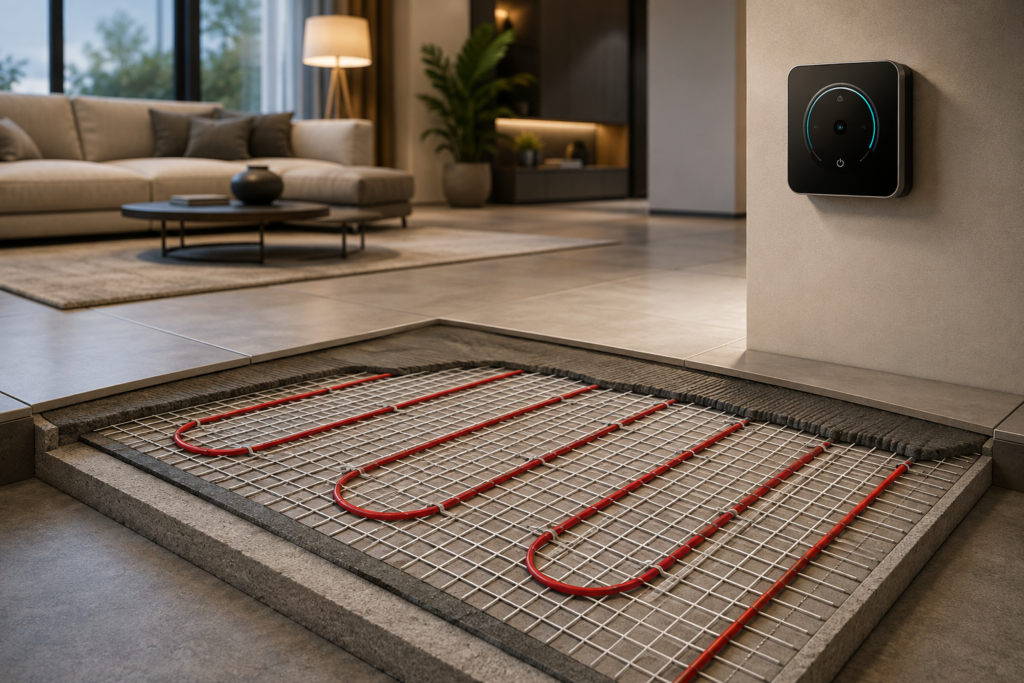
If you are planning a new home, renovating a villa, or looking for a more comfortable heating solution for selected rooms, understanding the electric underfloor heating cost is an important part of the decision. The final price is not determined by the heating system alone. Floor area, insulation, flooring type, system capacity, thermostat selection, installation requirements, and project conditions can all affect the total investment. In Saudi Arabia, electric underfloor heating can be particularly attractive for bathrooms, bedrooms, living areas, and selected zones where homeowners want discreet and controllable warmth without visible radiators or portable heaters. The right design can provide comfort while giving you precise control over when and where heating operates.
What Determines Electric Underfloor Heating Cost in Saudi Arabia?
The electric floor heating cost for a Saudi home depends on several variables rather than one fixed price per square meter. The first consideration is the area that actually needs heating, because furniture, kitchen cabinets, built-in wardrobes, and other permanent fixtures may not require heating beneath them. The type of heating mat or cable, required power output, floor preparation, insulation, thermostat, electrical work, and installation complexity can also influence the final quotation. For this reason, a professional site assessment is more useful than relying on a generic online price. Climake provides electric underfloor heating solutions designed for residential and commercial applications in Saudi Arabia.
Electric Underfloor Heating Cost Breakdown
When comparing underfloor heating costs in Saudi Arabia, it is useful to separate the investment into several components. The heating system itself is only one part of the project. You may also need to consider the thermostat and control system, electrical connections, floor preparation, insulation, installation labor, and any finishing work required before the final flooring is installed. The actual quotation should therefore be based on the heated area and project requirements rather than the total property size alone. A small bathroom, for example, can require a very different system from a large villa living room. This approach makes the quotation clearer and helps homeowners compare different proposals fairly.
Main Factors That Affect the Final Price
The final electric underfloor heating price can change according to the following:
- Heated floor area in square meters
- Required heating output
- Type of heating mats or cables
- Existing floor condition
- Thermal insulation
- Flooring material
- Thermostat and control features
- Electrical requirements
- Installation complexity
- New construction or renovation
The most important point is that two properties with the same floor area may still have different installation costs. A professional assessment can identify the actual heated zones and determine the appropriate system before installation begins.
How Much Does Electric Underfloor Heating Cost to Run?
The purchase price is only part of the equation. Homeowners should also consider the ongoing electricity consumption of an electric floor heating system. Running cost depends on the installed power, heated area, operating hours, target temperature, insulation, outdoor conditions, and thermostat settings. Importantly, the system does not necessarily operate continuously at full power. A thermostat can regulate operation according to the room temperature and the programmed schedule. This means the real electricity consumption of a properly controlled system can differ significantly from a simple calculation based on maximum power multiplied by 24 hours.
A Simple Way to Estimate Electricity Consumption
A basic estimate can start with the system’s rated power and the number of hours it operates. For example, if a heating zone has a rated load of 1.5 kW and operates at its full rated output for four hours, the theoretical consumption would be approximately 6 kWh during that period. In real use, however, the thermostat may cycle the system on and off after the desired temperature is reached. Insulation, room conditions, flooring, and the selected temperature all influence the actual result. Therefore, this calculation should be treated as an estimate rather than a guaranteed electricity bill.
Does a Smart Thermostat Reduce Underfloor Heating Costs?
A smart thermostat can play an important role in controlling heating consumption because it allows users to determine when and where the system operates. Instead of heating every room continuously, homeowners can create schedules for bedrooms, bathrooms, living areas, or other zones according to their daily routines. Modern smart controls can also provide remote management and temperature scheduling. Climake’s GREMAKE electric underfloor heating solution, for example, incorporates a Wi-Fi thermostat with scheduling and zoned-control capabilities.
The value of smart control is therefore not simply having a modern screen on the wall. Its real benefit is better control over the heating system. If a room is occupied only during certain hours, the thermostat can be programmed around that routine. For larger homes, independent zones can allow different rooms to operate according to their individual requirements. This can improve comfort and help avoid unnecessary heating, although actual savings depend on the system design, insulation, usage pattern, and electricity tariff.
Electric Underfloor Heating vs Traditional Heating: Which Is More Cost-Effective?
When considering the cost of electric floor heating, it is important to compare the complete value of the system rather than looking only at the initial installation price. Portable heaters may have a lower initial cost because they require little installation, while electric underfloor heating requires planning and professional installation beneath the floor. However, underfloor heating provides an invisible heating solution with even heat distribution and room-by-room control. Climake’s current electric underfloor heating system is designed with a thin profile of approximately 3–4.5 mm, which can help minimize its impact on finished floor height.
| Factor | Electric Underfloor Heating | Portable Electric Heater |
|---|---|---|
| Initial investment | Higher | Lower |
| Installation | Professional installation | Minimal |
| Heat distribution | Even across the floor | More localized |
| Appearance | Hidden beneath flooring | Visible |
| Room zoning | Possible | Usually individual device control |
| Comfort | Radiant, even warmth | Depends on heater location |
| Best use | Planned heating zones | Temporary or occasional heating |
The right choice depends on how the space will be used. A homeowner who wants permanent, invisible heating in selected rooms may value the benefits of underfloor heating more than someone who needs temporary heating for a few hours.
Is Electric Underfloor Heating Suitable for Saudi Homes?
Saudi Arabia has a wide range of climates and property types, so the right heating solution depends on location, building design, insulation, and usage. Electric underfloor heating can be particularly useful where homeowners want targeted seasonal heating rather than a system operating throughout the entire property. Climake identifies bathrooms, bedrooms, villas, and luxury residential projects among the applications for electric underfloor heating.
For a renovation project, electric systems can also offer an advantage because they can be installed with relatively limited floor-height impact. Climake states that its electric system uses thin heating cables and mats, with a system thickness of around 3–4.5 mm. The suitability of the system still needs to be evaluated according to the floor construction, electrical capacity, insulation, and selected floor covering before installation.
Which Rooms Benefit Most from Electric Underfloor Heating?
Not every room necessarily requires the same heating strategy. In many Saudi homes, homeowners may choose to heat specific zones where comfort is most important during winter.
Bathrooms
Bathrooms are one of the most practical applications because cold tiles can feel uncomfortable during winter mornings. Underfloor heating warms the floor surface and can make the room more comfortable without occupying wall space.
Bedrooms
Bedrooms can benefit from scheduled heating, particularly when the system is connected to a programmable or smart thermostat. This allows the temperature to be managed according to sleeping and waking routines.
Living Rooms
Large living areas require careful system design because the heated area, insulation, windows, ceiling height, and overall heat loss can influence performance. A professional assessment should determine the appropriate heating capacity.
Does Flooring Affect Electric Underfloor Heating Cost?
Yes. Flooring can influence both installation requirements and heating performance. Ceramic and porcelain tiles are commonly considered suitable because they transfer heat effectively, while wood and other materials require compatibility with underfloor heating and adherence to the flooring manufacturer’s specifications. The installation method may also differ depending on the existing floor structure and the chosen finish.
For this reason, the cheapest initial installation is not always the best long-term choice. A system should be designed around the complete floor assembly, including insulation, heating element, adhesive or leveling layer where required, and final flooring. Climake states that its electric underfloor heating systems can be used with several flooring types, including ceramic, wood, and tiles, but the specific installation should always be assessed for the selected material.
Installation Cost: What Should a Professional Quotation Include?
The Underfloor Heating Installation Cost should be evaluated as part of the complete project. A professional quotation should clearly identify the heated area, system type, heating output, thermostat, installation work, electrical requirements, and any floor preparation needed. This makes it easier to compare quotations without confusing a low equipment price with a low total project cost.
A typical installation process may include:
- Site inspection and measurements.
- Identification of heated zones.
- Assessment of floor condition and insulation.
- Selection of the appropriate heating system.
- Installation of heating mats or cables.
- Installation of thermostat and temperature sensor.
- Electrical testing.
- Final system testing before handover.
Climake describes its installation approach as a professional service supported by consultation and after-sales assistance.
How Can You Reduce Electric Underfloor Heating Costs?
Reducing the total cost does not necessarily mean choosing the cheapest equipment. Better planning can often prevent unnecessary expenses and improve long-term performance. Start by identifying which rooms genuinely need heating rather than automatically installing the system throughout the entire property. Proper insulation can reduce heat loss, while suitable floor materials can help transfer heat effectively. A programmable or smart thermostat can also help control operating schedules and individual zones. Most importantly, system sizing should be based on the actual space and heating requirements rather than selecting equipment simply because it has a lower purchase price.
Electric Underfloor Heating for New Homes vs Renovations
The project stage can have a significant effect on installation planning. In a new-build property, the heating system can be incorporated into the floor design before final finishes are completed. This generally gives the installer greater flexibility when planning zones, electrical connections, insulation, sensors, and thermostats.
Renovation projects require more attention to the existing floor structure and finished floor height. Thin electric systems can be attractive for renovation because they can minimize changes to the floor level. Climake’s current system specification indicates a thickness of approximately 3–4.5 mm, although the complete build-up depends on the installation method and floor finish.
Is Electric Underfloor Heating Worth the Cost?
Electric underfloor heating can be worth the investment when the system is correctly designed for the property and used in spaces where controlled radiant comfort provides meaningful value. It can be particularly attractive for homeowners who want invisible heating, comfortable floors, room-by-room control, and a modern alternative to visible heaters.
However, it should not automatically be considered the cheapest heating solution for every large property. For extensive whole-house applications, the homeowner should compare electric underfloor heating with other available heating technologies and evaluate both installation and long-term operating costs. Climake itself distinguishes electric underfloor heating as a practical option for smaller spaces and selected areas, while water-based systems can be more suitable for larger properties.
Why Choose Climake for Electric Underfloor Heating in Saudi Arabia?
Choosing the right system is only one part of the project. Proper design, installation, controls, and after-sales support all contribute to the final result. Climake provides heating and climate solutions in Saudi Arabia, including electric underfloor heating for residential and commercial applications. Its current system offering highlights professional installation, smart control options, a thin system profile, and a stated 20-year warranty for its electric underfloor heating solution.
If you are comparing Electric Underfloor Heating Cost in Saudi Arabia, the best next step is to request a project-specific assessment rather than relying on a generic price. The actual quotation should reflect your heated area, floor type, electrical requirements, insulation, thermostat, installation conditions, and intended usage. This approach gives you a clearer understanding of the initial investment and helps you choose a system based on comfort, performance, and long-term value.
Frequently Asked Questions
How much does electric underfloor heating cost in Saudi Arabia?
There is no single fixed price because the total cost depends on the heated area, system capacity, floor condition, insulation, thermostat, flooring, electrical work, and installation requirements. A site assessment is the most reliable way to determine the actual project cost.
Is electric underfloor heating expensive to run?
Running costs depend on the installed power, operating hours, room temperature, insulation, floor construction, and thermostat settings. Smart scheduling and zoning can help prevent unnecessary operation, but actual consumption varies from one property to another.
Is electric underfloor heating suitable for villas?
Yes, but the right system depends on the villa’s size, insulation, floor construction, and heating requirements. For larger properties, it is important to compare electric underfloor heating with other heating solutions before selecting the final system.
Can electric underfloor heating be installed during renovation?
Yes. Thin electric systems can be suitable for renovation projects because they can minimize the effect on finished floor height. The existing floor and installation conditions should be inspected before selecting the system.
Can I use a smart thermostat with electric underfloor heating?
Yes. Smart thermostats can provide scheduling, temperature control, and in some systems, zoned or remote control. Climake’s GREMAKE solution includes a Wi-Fi thermostat with scheduling and zoned-control capabilities.
Which flooring is best for electric underfloor heating?
Tiles and ceramic flooring are commonly suitable because they transfer heat effectively. Wood and other flooring materials can also be possible when they are approved for underfloor heating and installed according to the manufacturer’s requirements.
Does electric underfloor heating require regular maintenance?
Electric underfloor heating generally requires little routine maintenance because the heating elements are installed beneath the floor. However, electrical controls, thermostats, sensors, and system performance should be checked when necessary.
Should I install electric underfloor heating throughout my entire home?
Not necessarily. Some homeowners may benefit more from heating selected rooms or zones, such as bathrooms, bedrooms, or living areas. For large villas or whole-house projects, a professional assessment should compare the available heating options.
Get a Customized Electric Underfloor Heating Quote
The best way to understand your Electric Underfloor Heating Cost is to calculate it according to your actual property rather than using a generic online estimate. Climake can assess the space, identify the required heated zones, recommend the appropriate system and controls, and provide a solution designed around your project requirements in Saudi Arabia.
Contact Climake today to discuss your project and request a professional consultation.
Phone: 966567863898
WhatsApp: 966508656011