


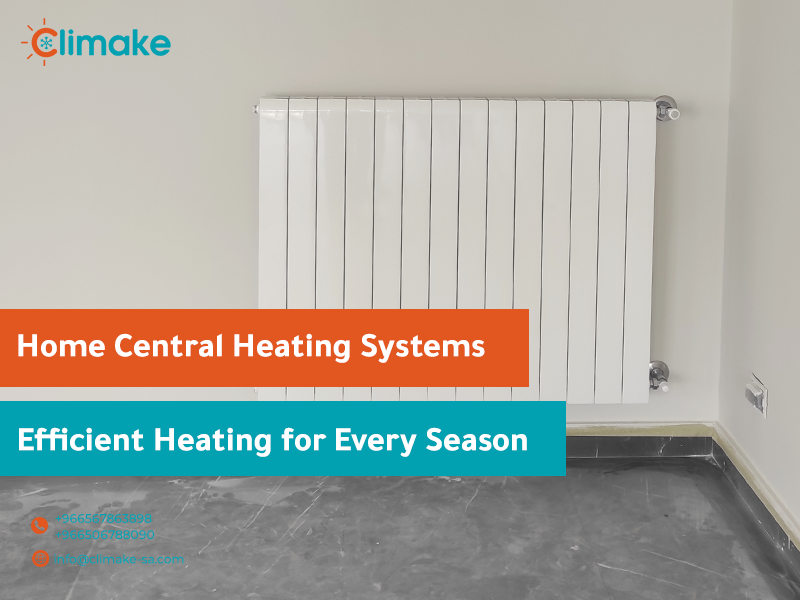
A home central heating system is no longer a luxury; it has become an essential solution for achieving comfort, energy efficiency, and consistent indoor temperatures, even in regions with moderate winters like Saudi Arabia.
Whether you are building a new home or upgrading an old heating setup, choosing the right central heating system for your home can significantly impact your comfort, energy bills, and long-term property value.
In this guide, we will explore everything you need to know about central heating systems for homes, focusing on modern and efficient solutions offered by Climake, such as:
- Heat Pump Water Heaters
- Electric Underfloor Heating
What is a home central heating system?
A central heating system is a system that generates heat from a single source and distributes it throughout the entire house.
Instead of using separate heaters in each room, a centralized heating system for home ensures that every space receives consistent warmth.
How It Works Simply:
- Heat is produced using a heater (heat pump or water heater)
- Heat is distributed via pipes or underfloor systems
- Temperature is controlled using thermostats
This makes it one of the most efficient heating systems available today.
Why central heating matters in modern homes
Modern homes require smarter and more efficient heating solutions. A central heating system for the house offers several advantages:
- Even heat distribution across all rooms
- Reduced energy waste compared to old heating systems
- Better indoor air quality
- Increased property value
- Smart control and automation
In Saudi Arabia, where temperatures can drop significantly in winter (especially at night), having a central heater for home ensures comfort without relying on multiple inefficient devices.
Central heating systems for homes
There are multiple types of central heating systems, but not all are suitable for every home.
Climake focuses on the most practical and efficient systems for the Saudi market.
1. Heat Pump Water Heaters
These are among the most advanced central heating solutions available today.
- Extract heat from the surrounding air and convert it into usable energy
- Extremely energy-efficient compared to traditional systems
- Ideal for both water heating and underfloor heating integration
Heat pumps work efficiently at lower temperatures and are perfect for modern homes seeking sustainability and cost savings.
2. Traditional Tank Water Heaters
A reliable option for many homes.
- Stores hot water in a tank
- Suitable for continuous usage
- Lower upfront cost
This type is still widely used as part of a centralized heater for home, especially in residential buildings.
3. Electric Underfloor Heating
One of the most comfortable and modern systems.
- Installed beneath the flooring
- Provides uniform heat distribution
- Invisible and space-saving
Electric underfloor heating uses heating wires under the floor to radiate warmth evenly across the room.
It is especially popular in:
- Bathrooms
- Villas
- Luxury residential projects
Types of home central heating systems
From a technical perspective, central heating systems can be categorized into:
Hydronic systems (water-based)
- Use hot water circulated through pipes
- Ideal for underfloor heating
- Highly efficient and comfortable
Electric heating systems
- Use electrical heating elements
- Easy installation
- Best for smaller spaces
Heat pump systems
- Use renewable energy from the air
- High efficiency and low operating cost
- Perfect for integration with modern homes
Key components of a central heating system
Understanding system components helps you choose the right heating system for your home.
1. Heat source
- Heat pump
- Water heater
2. Distribution system
- Pipes
- Underfloor heating network
3. Control system
- Thermostats
- Smart controllers
4. Storage (Optional)
- Water tanks
How home central heating systems work
The operation of a central heating system for home follows 3 main steps:
1. Heat generation
The system produces heat using:
- Heat pump
- Electric heater
- Water heater
2. Heat distribution
- Water flows through pipes
- Or heat radiates through floors
Underfloor heating distributes heat evenly across the floor surface, creating consistent comfort.
3. Temperature control
- Smart thermostats regulate temperature
- Reduce energy consumption
Benefits of installing a central heating system
Installing a centralized heating system offers long-term value.
1. Consistent comfort
No cold spots, every room stays warm.
2. Energy efficiency
Modern systems like heat pumps reduce energy usage significantly.
3. Cost savings
Lower electricity bills over time.
4. Better health
- Reduces humidity
- Prevents mold
- Improves air quality
5. Increased property value
Homes with central heating systems are more attractive to buyers.
Installation process explained
Installing a central heating system for home involves:
Step 1: Site assessment
- Home size
- Insulation
- Layout
Step 2: System design
- Choose a suitable heating system
- Plan pipe layout
Step 3: Installation
- Install a heat pump or a heater
- Lay pipes or a floor heating system
Step 4: Testing
- Ensure efficiency and safety
Typical installation takes the following:
- 3 to 7 days, depending on project size
Costs of home central heating systems
Costs vary based on:
- System type
- Home size
- Installation complexity
Estimated Cost Factors:
- Equipment cost
- Installation labor
- Maintenance
Running costs:
- Heat pumps → low operating cost
- Electric systems → moderate cost
- Tank heaters → depends on usage
Is a central heating system worth it in warm climates?
Yes, especially in Saudi Arabia.
Even though winters are not extreme, temperatures can drop significantly at night.
A central heating system ensures:
- Comfortable indoor environment
- Better sleep quality
- Reduced reliance on portable heaters
Maintenance and heating system service
Regular heating system service is essential.
Includes:
- System inspection
- Cleaning
- Performance testing
Recommended Frequency:
- Once per year
This ensures:
- Efficiency
- Safety
- Longer lifespan
FAQs About Home Central Heating Systems
What is central heating?
Central heating is a system that heats an entire home from one central source and distributes heat to all rooms.
What is a secondary heating source?
It is an additional heating device used alongside the main system, such as portable heaters.
What is a heating system service?
It is a professional maintenance process that ensures your system works efficiently and safely.
How often should a heating system be serviced?
At least once a year before winter.
What are the 4 types of heating systems?
Heat pumps Hydronic systems Electric systems Forced air systems
What is a service water heating system?
A system that provides hot water for domestic use like showers and kitchens.
What is the most efficient heating system for a house?
Heat pump systems are considered the most energy-efficient.
Can central heating affect your sinuses?
Yes, if maintenance is poor. Clean systems improve air quality.
Which heater is best for asthmatics?
Underfloor heating is ideal because it reduces dust circulation.
What is the best heating system for villas in Saudi Arabia?
Heat pump + underfloor heating is the best combination.
Is underfloor heating suitable for tiles?
Yes, tiles are one of the best materials for heat transfer.
How long does a heating system last?
15–25 years with proper maintenance.
A home central heating system is one of the smartest investments for modern homeowners in Saudi Arabia.
By choosing advanced solutions like:
- Heat Pump Water Heaters
- Electric Underfloor Heating
- Traditional Tank Water Heaters
You ensure:
- Maximum comfort
- Lower energy bills
- Long-term reliability
If you are looking for central heating solutions tailored to your home, Climake provides customized systems designed for efficiency, durability, and performance.
Start your journey toward a warmer, more comfortable home today.
For consultation:
Phone: 966567863898
WhatsApp: 966508656011